

On View June 4th-June 28th, 2026
Artist Bio
Milton Homann is a born and raised Spanish artist, currently living in California, although finished his studies in Germany. His main concentration within his artworks come from his Argentinian roots, specifically from Patagonia.This is where his influence and connection to the indigenous tribe, the Mapuches, comes from. The main purpose of his work is to publicly introduce new perspectives and cultural heritage. Impulsed by giving his family and his people a voice within the
art scene. Far away from his roots and his family, his connection remains strong wherever his path takes him as a nomad artist. His very few forms of artistic expressions are often introduced as a form of installation accompanied by literature. Trying to forge a connection between his culture and the viewers by completely transforming the environment, he creates a room of ancestral memories. This encapsulates the senses of the people with different textures, smells, and traditional artwork representations, such as drawings, paintings, and literature. This form of artistic expression transforms the traditional idea of each individual piece having its own independent meaning to becoming a piece with a meaning of its own but also living in harmony with a bigger artwork, this being the entire installation.
Nepegñe wünenkeche
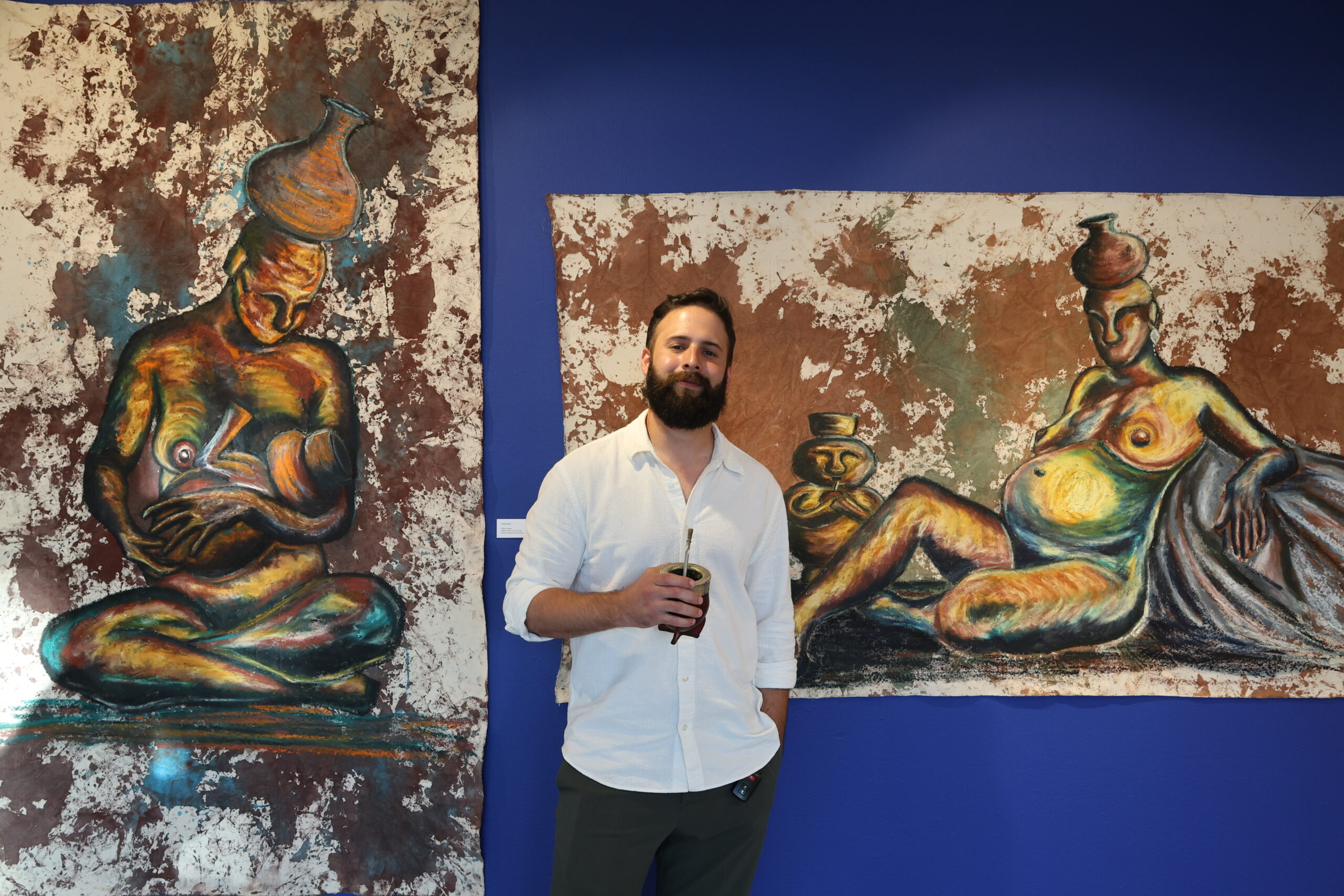
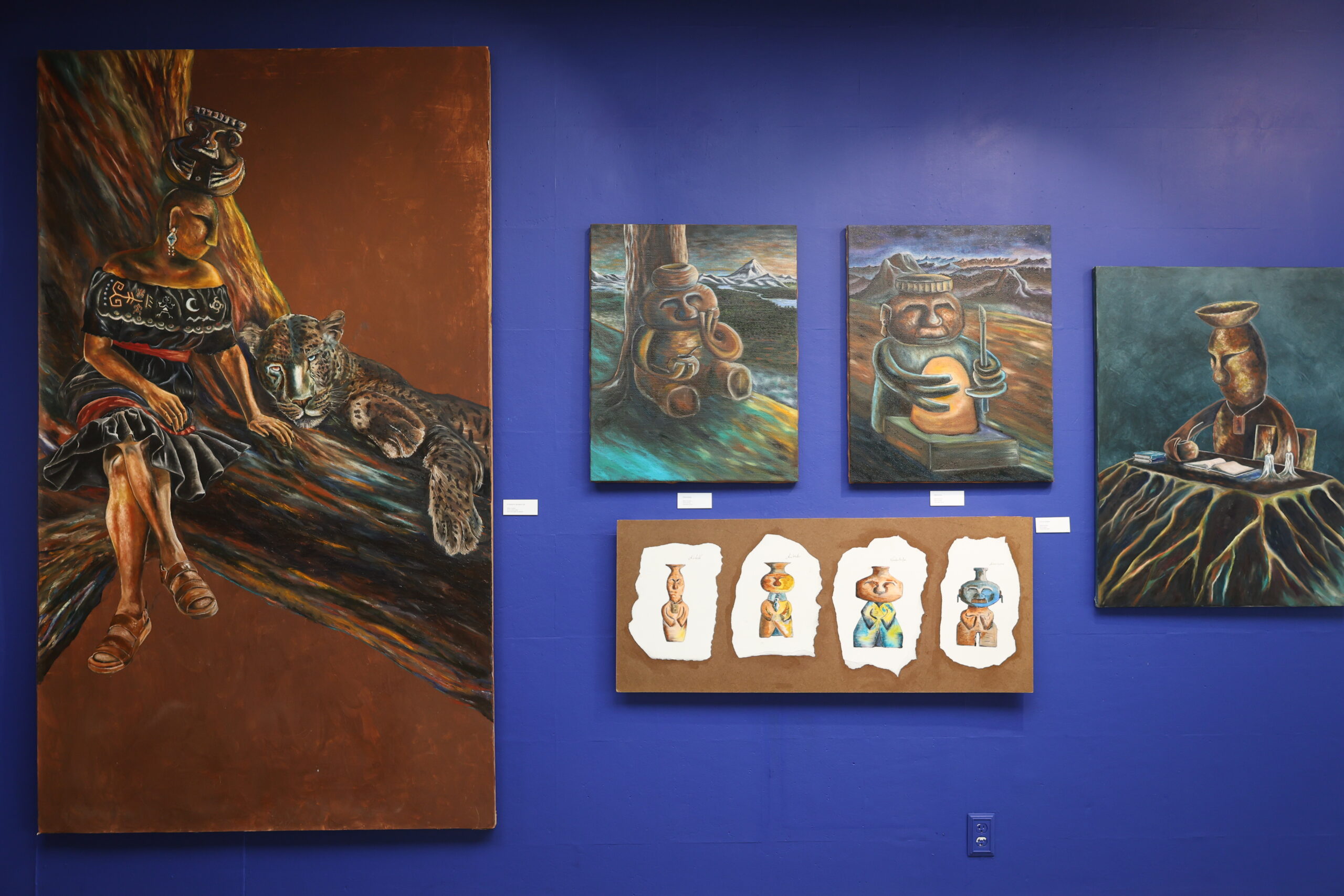
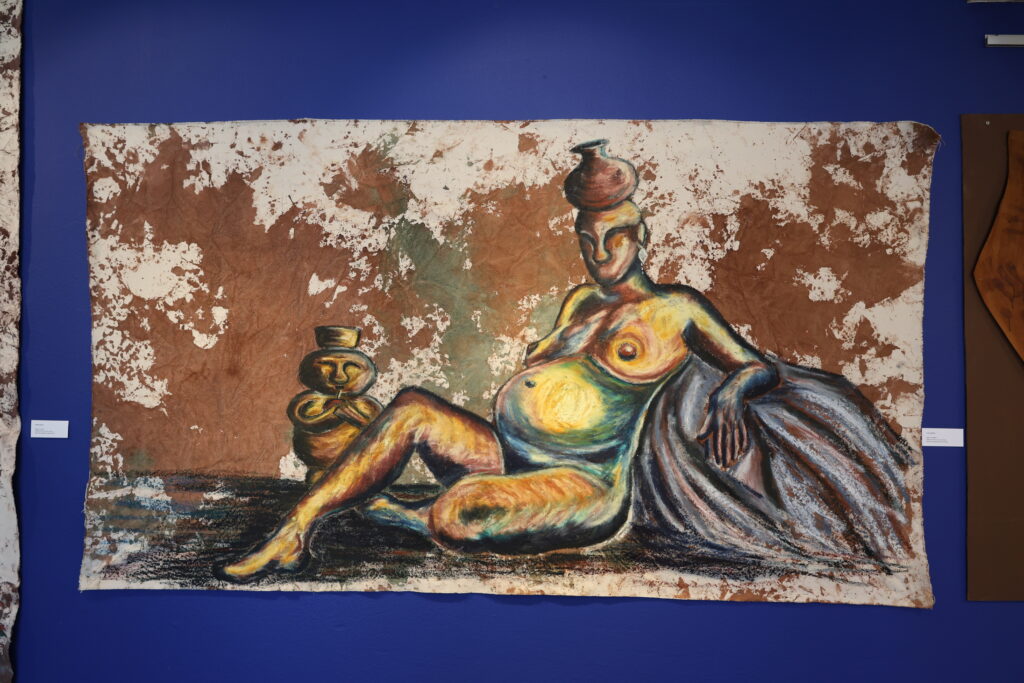
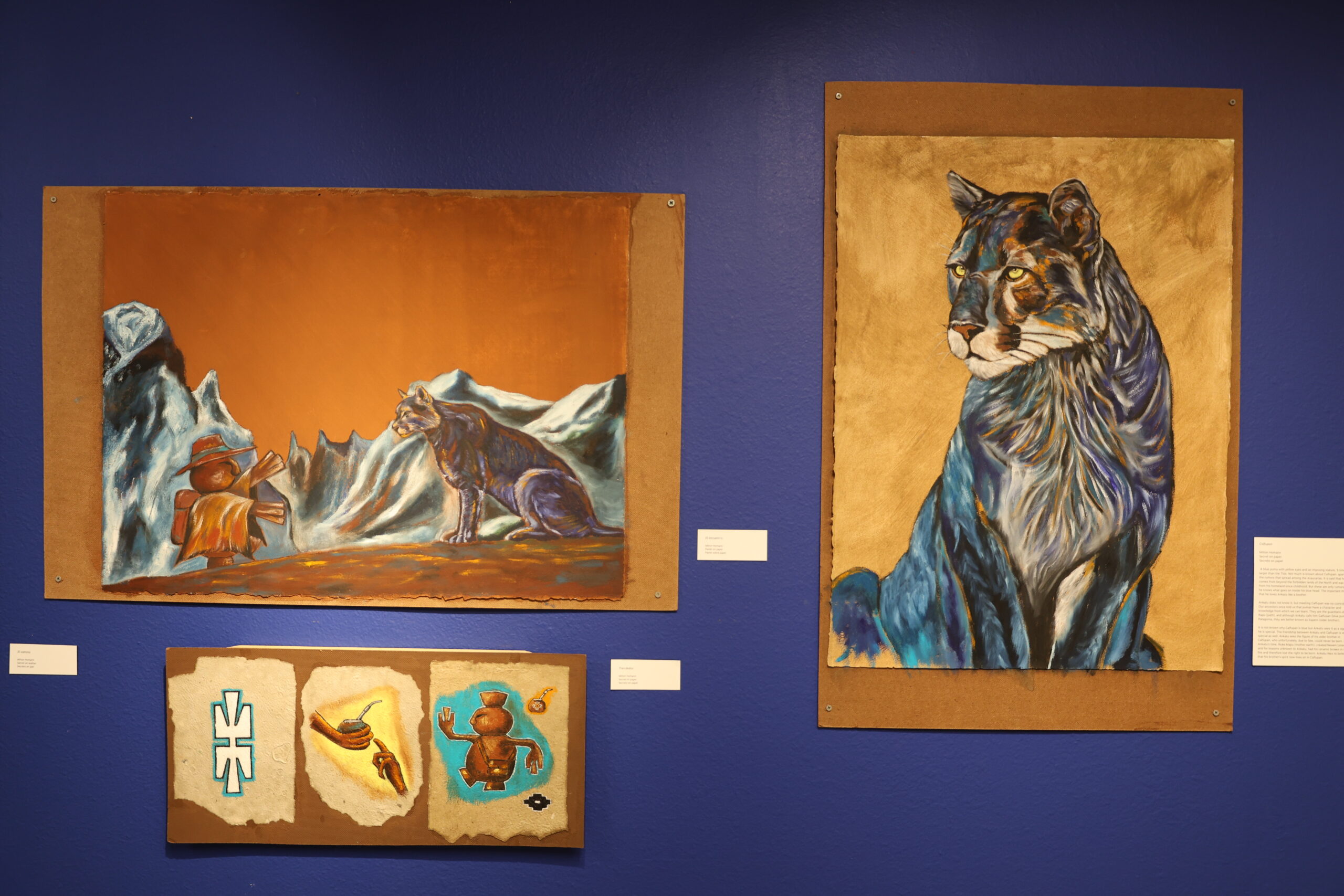
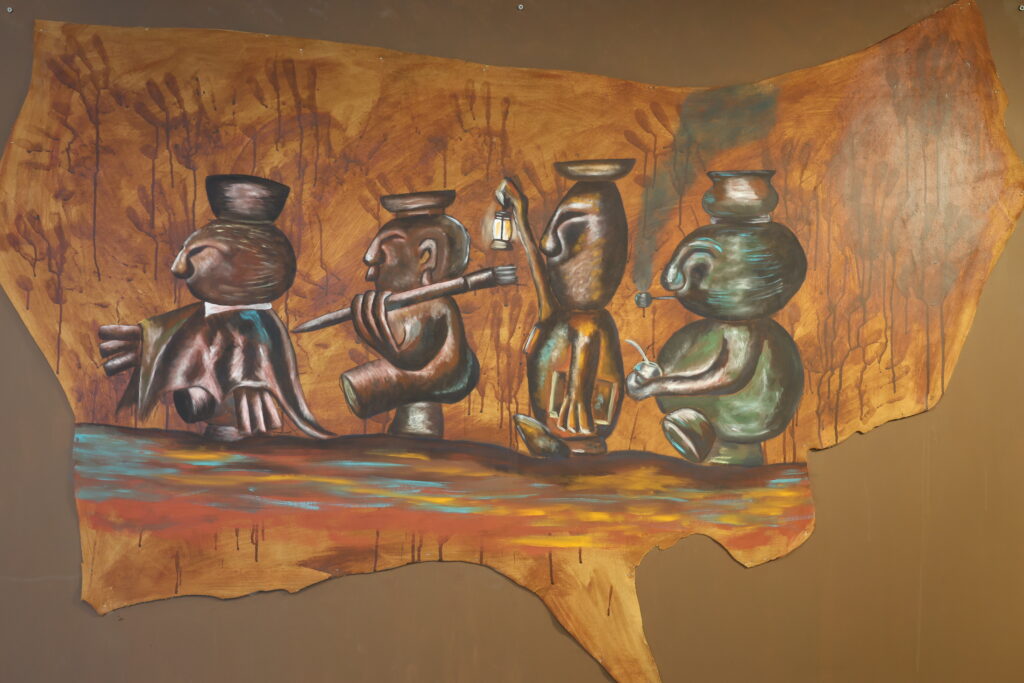
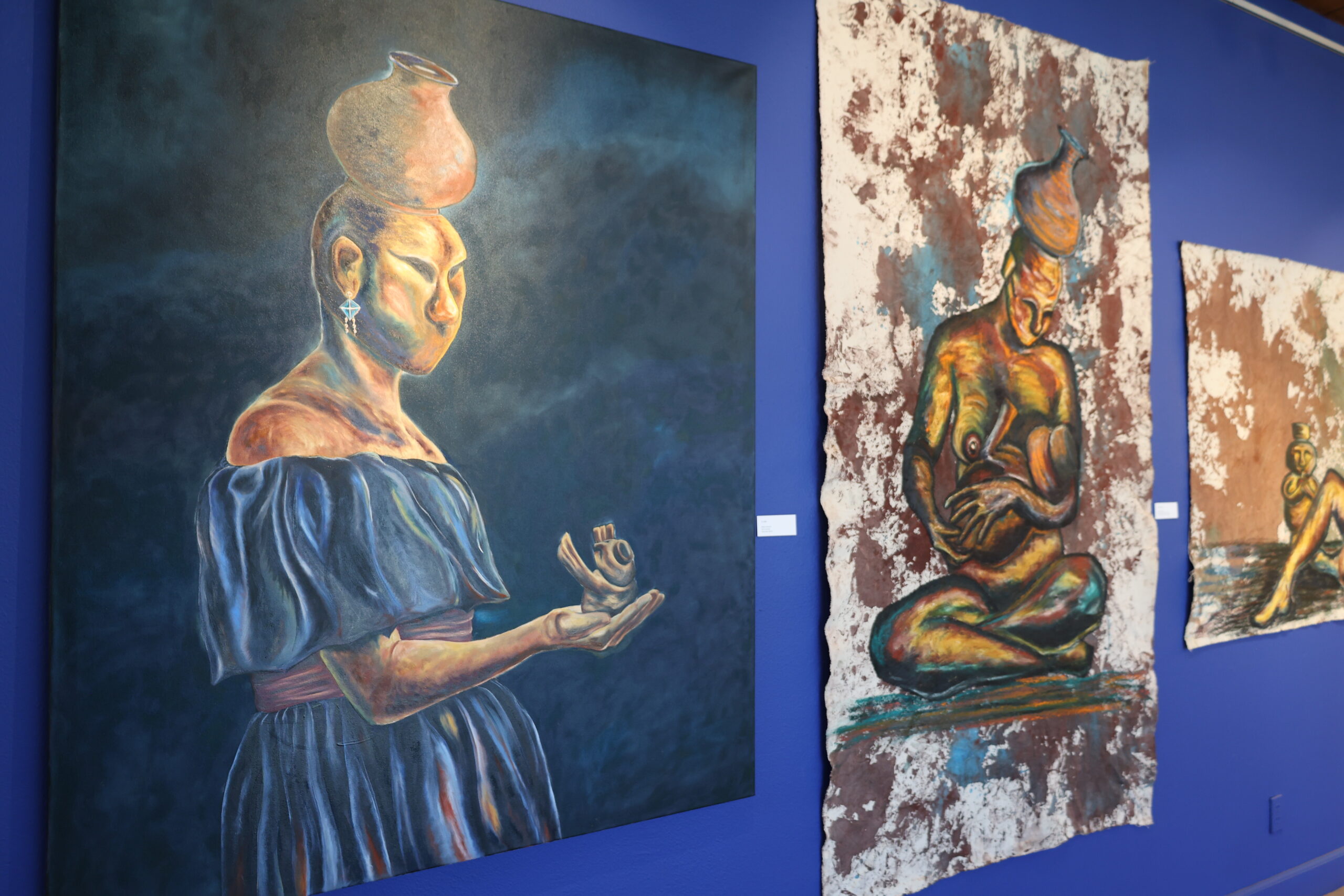
“Nepegñe wünenkeche” is a prologue that sheds light on the characters of the book and series The Chronicles of Ankatu. What appear to be random daily scenes of these dramatis personae actually provide clues to the four main characters and their relationships with each other. Their behavior is conditioned by the teachings of the Mapuche, and the symbolism within the paintings follows a strict iconographic meaning. This body of work goes beyond artistic expression: it explores the idea of a decolonial imagination — specifically a spiritually based worldview rooted in Mapuche and Selknam cultures. It opens a new perspective and cosmovision that allows us to step away from anthropology, archaeology, and linguistics. As a line of art practice research, it cannot be approached through traditional Western methods. Instead, it combines historical reports and diaries, and is made possible through his personal connection to his family and their descendants. This opens the possibility of finding the last traces of the Selknam roots and bringing them into the present. At the same time, this work investigates how his artistic practice serves as a vehicle for reclaiming indigenous identity in a diasporic context.”
Biografía del artista:
Milton Homann es un artista nacido y criado en España que actualmente reside en California, aunque cursó sus estudios en Alemania. La principal fuente de inspiración de sus obras proviene de sus raíces argentinas, concretamente de la Patagonia. De ahí proviene su influencia y su vínculo con la tribu indígena de los mapuches. El objetivo principal de su obra es dar a conocer nuevas perspectivas y el patrimonio cultural. Le impulsa el deseo de dar voz a su familia y a su pueblo dentro del mundo del arte. Lejos de sus raíces y de su familia, su conexión sigue siendo fuerte allá donde le lleve su camino como artista nómada.
Sus escasas formas de expresión artística suelen presentarse como
instalaciones acompañadas de literatura. Intentando forjar una conexión entre su cultura y los espectadores mediante la transformación completa del entorno, crea un espacio de recuerdos ancestrales. Esto envuelve los sentidos de las personas con diferentes texturas, olores y representaciones artísticas tradicionales, como dibujos, pinturas y literatura. Esta forma de expresión artística transforma la idea tradicional de que cada pieza individual tiene su propio significado independiente para convertirla en una pieza con un significado propio, pero que también vive en armonía con una obra de arte más amplia, que es la instalación en su conjunto.
Nepegñe wünenkeche
«Nepegñe wünenkeche» es un prólogo que arroja luz sobre los personajes del libro y la serie Las crónicas de Ankatu. Lo que parecen ser escenas cotidianas aleatorias de estos personajes nos ofrecen, en realidad, pistas sobre los cuatro protagonistas y las relaciones que mantienen entre ellos. Su comportamiento está condicionado por las enseñanzas de los mapuches, y el simbolismo de las pinturas sigue un estricto significado iconográfico. Este conjunto de obras va más allá de la expresión artística: explora la idea de una imaginación descolonial —concretamente, una cosmovisión basada en la espiritualidad y arraigada en las culturas mapuche y selknam—. Abre una nueva perspectiva y cosmovisión que nos permite alejarnos de la antropología, la arqueología y la lingüística. Como línea de investigación en la práctica artística, no puede abordarse mediante los métodos occidentales tradicionales. En su lugar, combina informes históricos y diarios, y es posible gracias a su conexión personal con su familia y sus descendientes. Esto abre la posibilidad de encontrar los últimos vestigios de las raíces selknam y traerlos al presente. Al mismo tiempo, este trabajo investiga cómo su práctica artística sirve de vehículo para recuperar la identidad indígena en un contexto diaspórico